
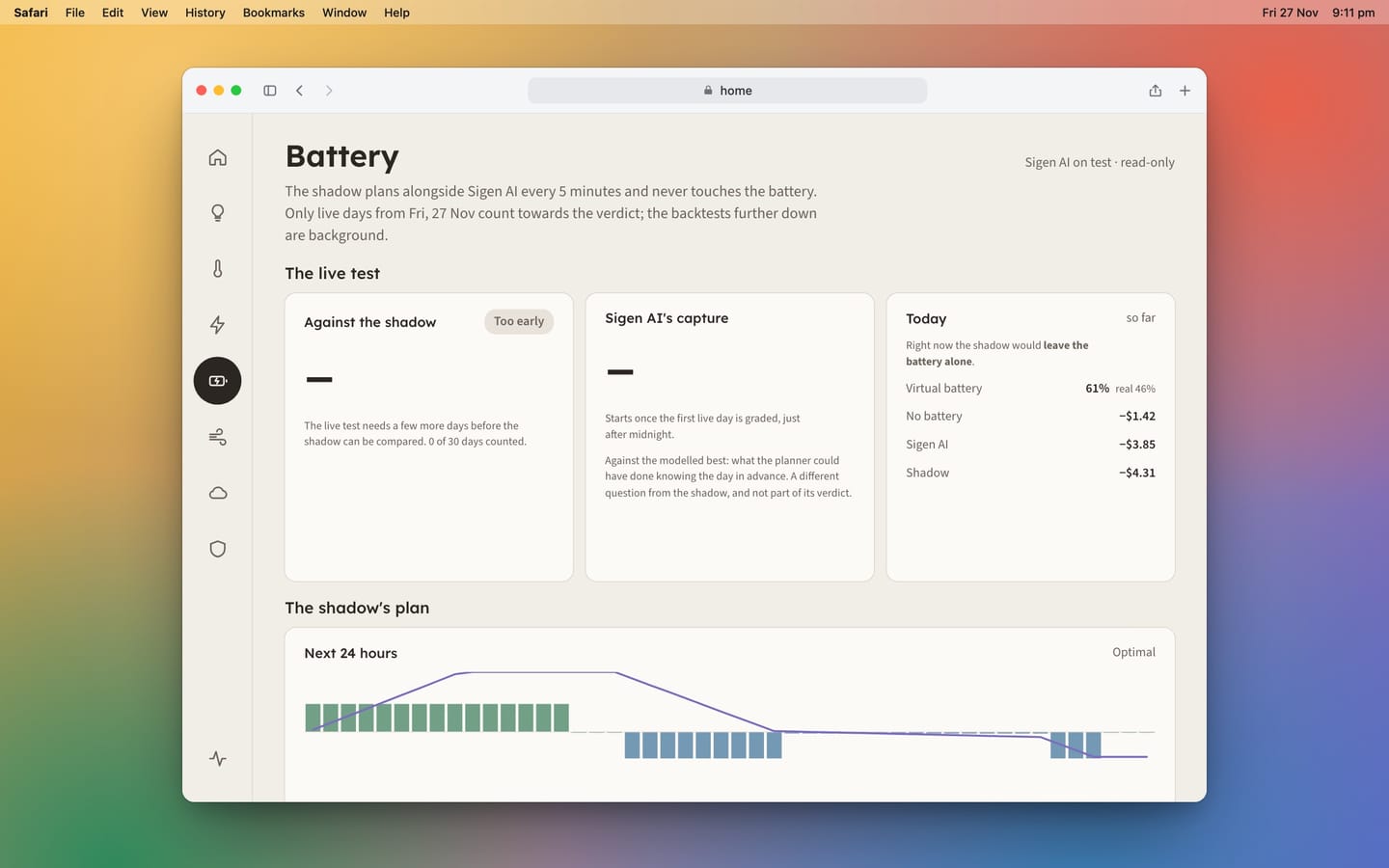
Part of the Home Dash series in The House Project. Last updated 27 November 2026.
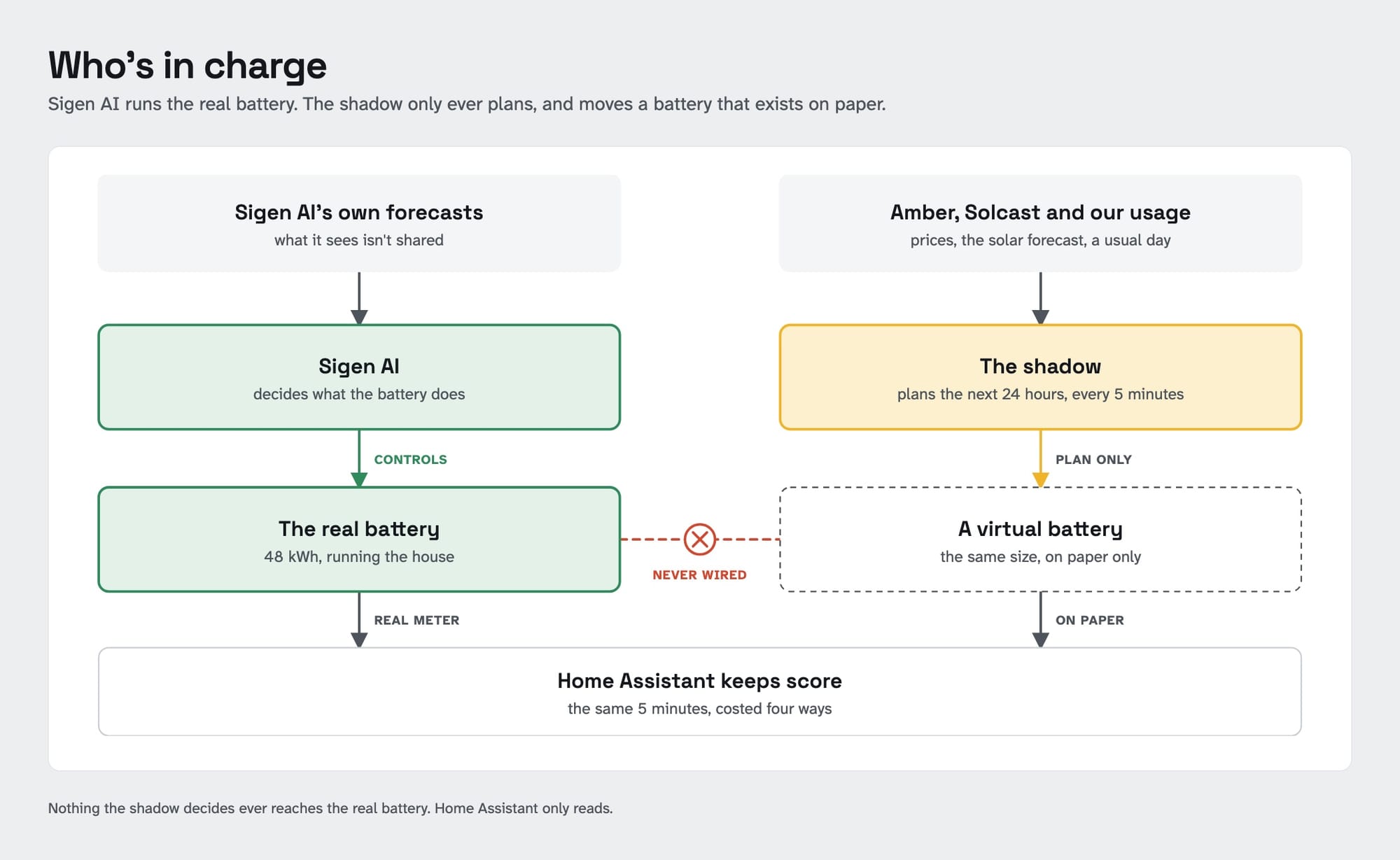
Our battery isn't run by me or by Home Assistant. It's run by Sigen AI, the brains that came with the Sigenergy system. It decides when to charge, when to hold and when to sell to the grid, and with Amber's prices changing every five minutes that's a lot of decisions.
Here's the thing. I've never really known if it's any good. The bill looks fine, but fine compared to what? So I built something to find out, had the maths checked twice, found a few things wrong along the way and fixed them. This is the story of all that, with a lot more pictures than usual.
A shadow battery
The idea is simple enough. Leave Sigen AI completely in charge, and run a second, pretend battery alongside it. A free planner called EMHASS looks at Amber's price forecast, Solcast's solar forecast for both sides of the roof and what the house usually uses at that time of day, then works out the best plan for the next 24 hours.
That plan only ever moves a virtual battery, the same size as ours. There's no wire, real or otherwise, from the shadow to the real battery, and I wanted it that way.
Five minutes at a time
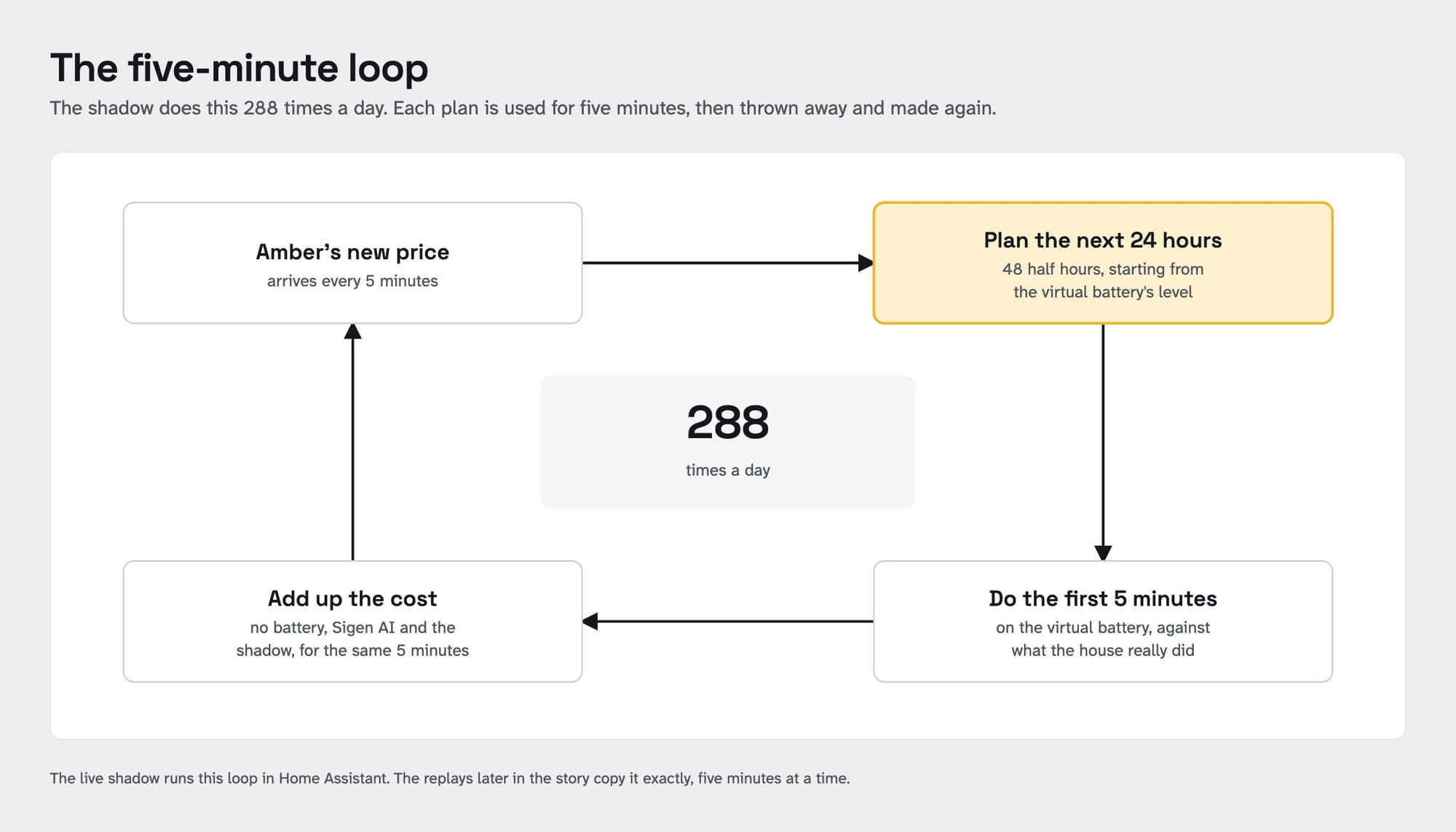
The shadow doesn't make one plan a day. Every five minutes, just after Amber's new price arrives, it plans the whole next day again from wherever its virtual battery happens to be. Then it does only the first five minutes of that plan and throws the rest away. Next time round it starts fresh.
Keeping score
Home Assistant keeps running totals of what each five minutes would have cost with no battery at all, what it actually cost with Sigen AI and what it would have cost with the shadow. Each night it adds one more, hindsight. That's the planner given another go once the day's over, knowing exactly how the prices and the sun turned out.
Hindsight gives a nice simple measure. How much of the best possible saving did Sigen AI actually make? Going back over the house's history from 9 November, the answer is 57 percent.
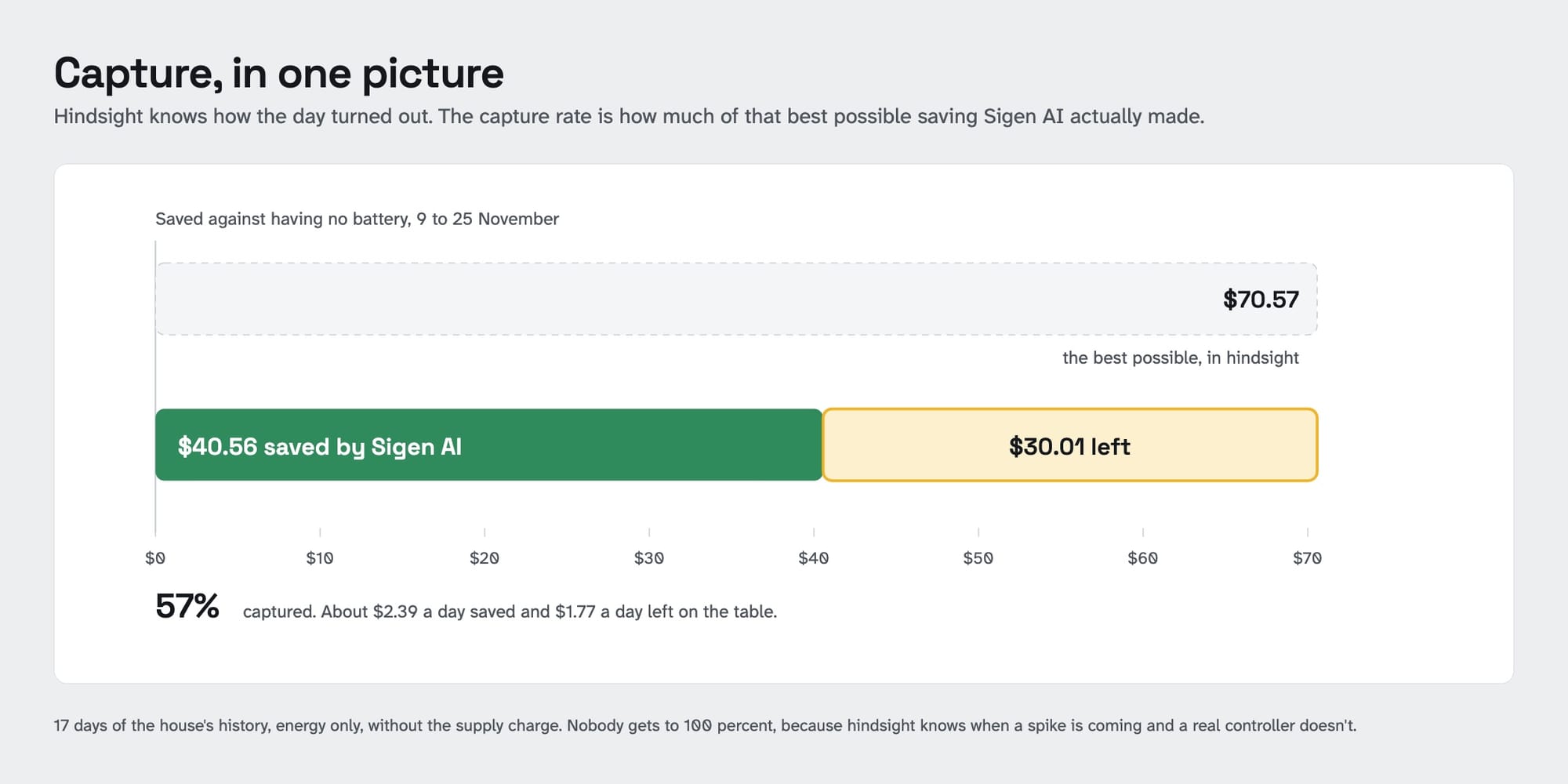
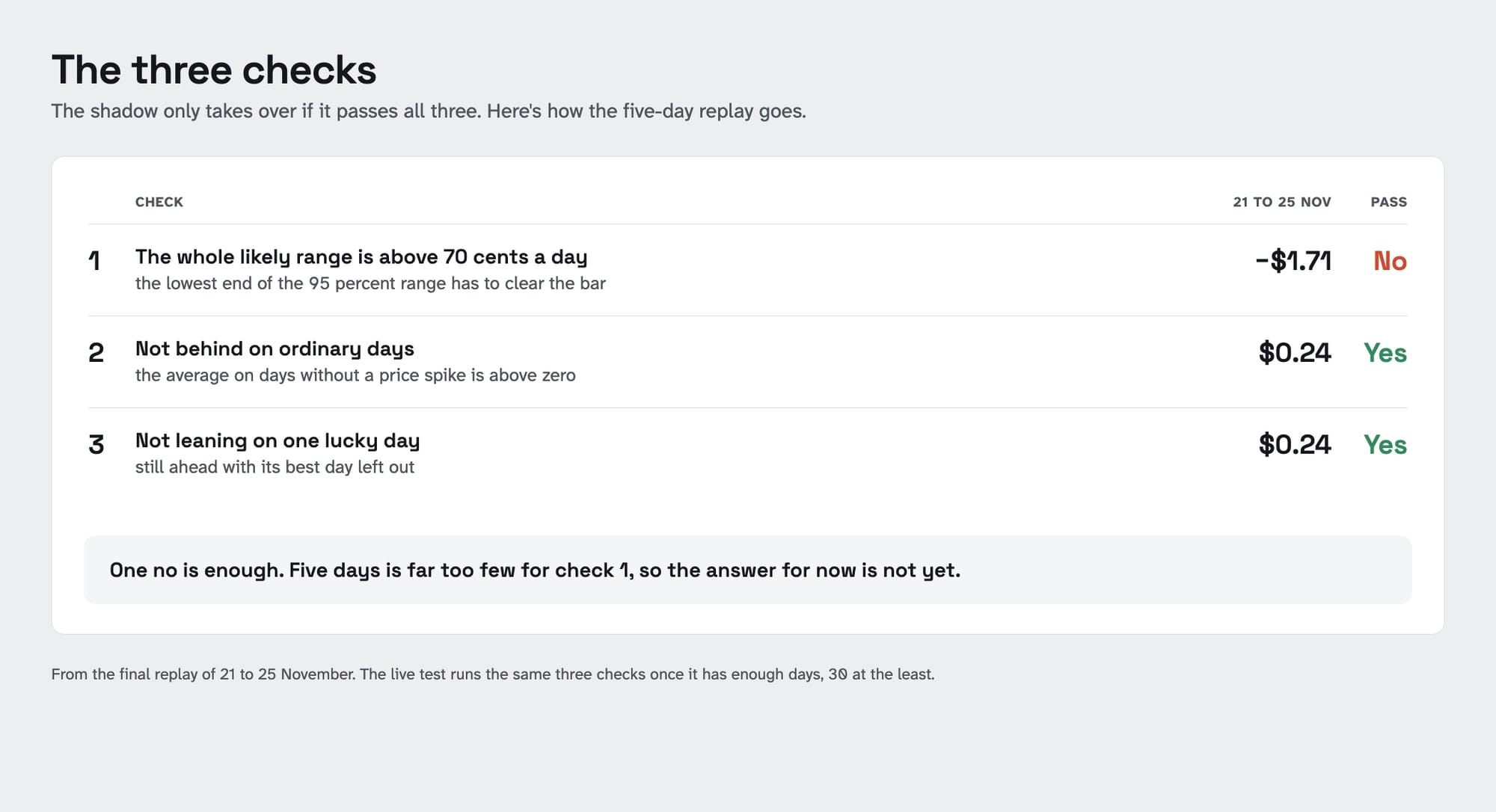
That $1.77 a day sounds like a lot left over, but to be fair hindsight knows when a spike is coming and the real thing doesn't. The more useful question is whether the shadow, working with forecasts just like Sigen AI, can do better than it. I set the bar at 70 cents a day, about five dollars a week. Below that, swapping the brains over isn't worth the risk or the effort.
Getting the maths checked
Before trusting any of this I wrote the whole model up, every formula, and sent it off for an independent check. I'm glad I did, because it caught real things.
The biggest was what happens at midnight. The shadow was quite happy to run its battery flatter than Sigen AI by the end of the day, which made its bill look better. But energy left in the battery is worth something tomorrow. A fair comparison has to count it.
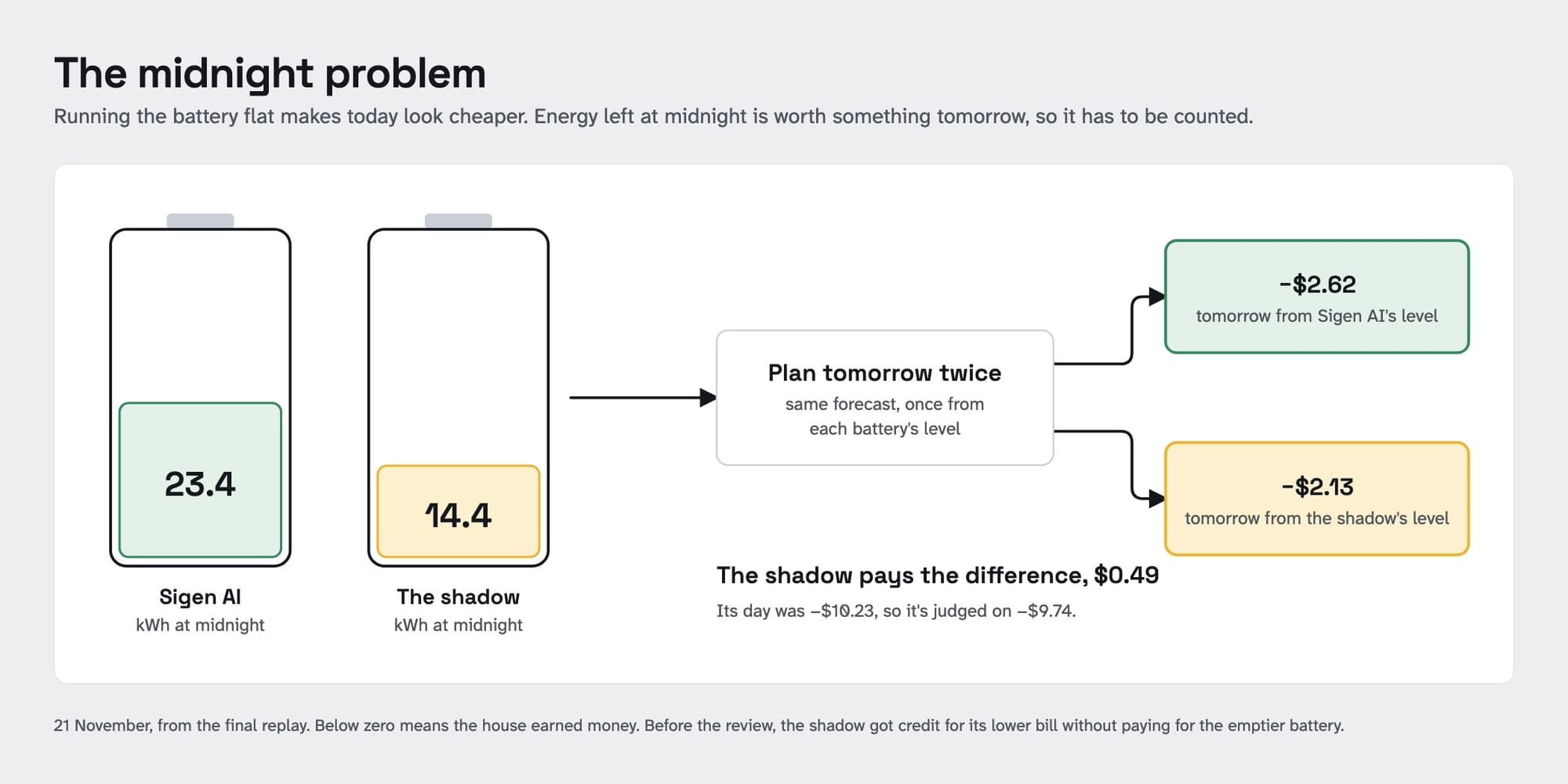
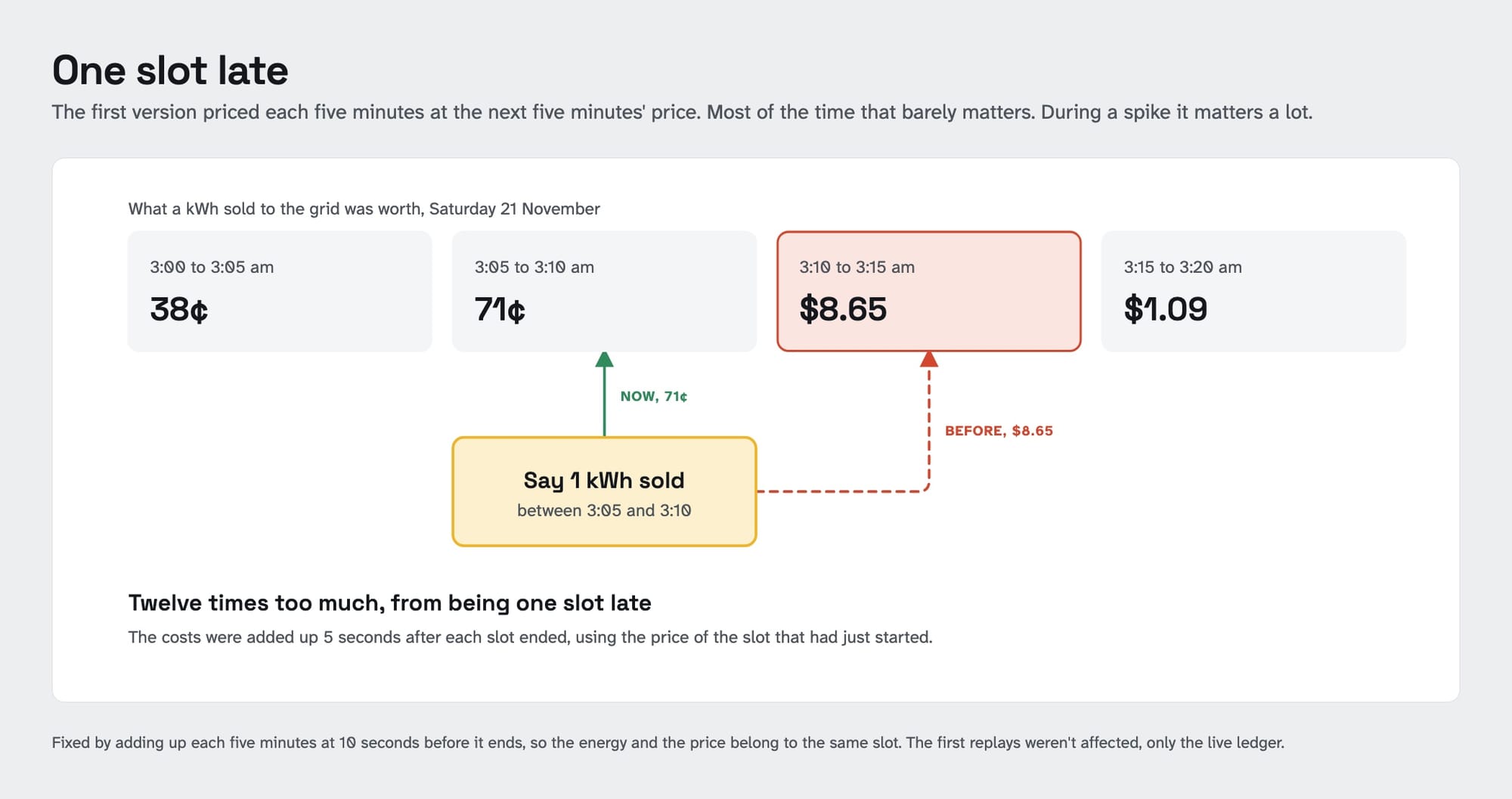
The second was timing. The first version added up each five minutes just after it finished, using the price that had just arrived. That's the next slot's price, not its own. Most of the time that's a cent here or there. On 21 November there was a five minute spike at ten past three in the morning.
It also pointed out that five days of results can't support a very confident range, and that days aren't independent of each other anyway. A run of cloudy days looks alike. So the page now uses a wider, more honest range and wants 30 days before it says anything.
The forecast nobody kept
Then, while fixing those, I found one of my own. To test the shadow on days before it existed, I replay them, rebuilding what the forecasts said at every moment from Home Assistant's history. Except Home Assistant quietly doesn't keep Solcast's half hourly forecast. It keeps the daily total and drops the detail. So every replay I'd run had the shadow planning for no sun at all. Not my finest moment.
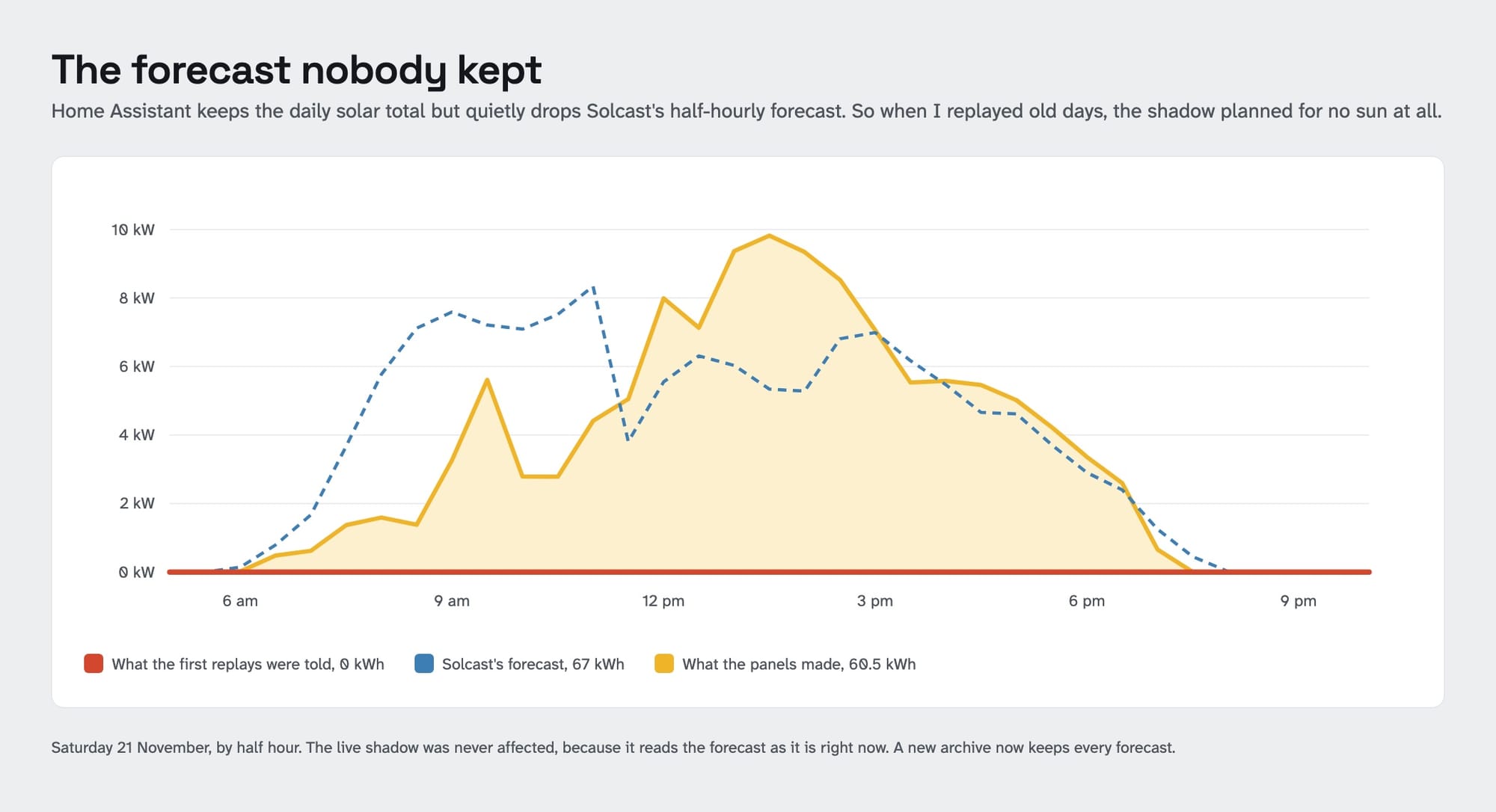
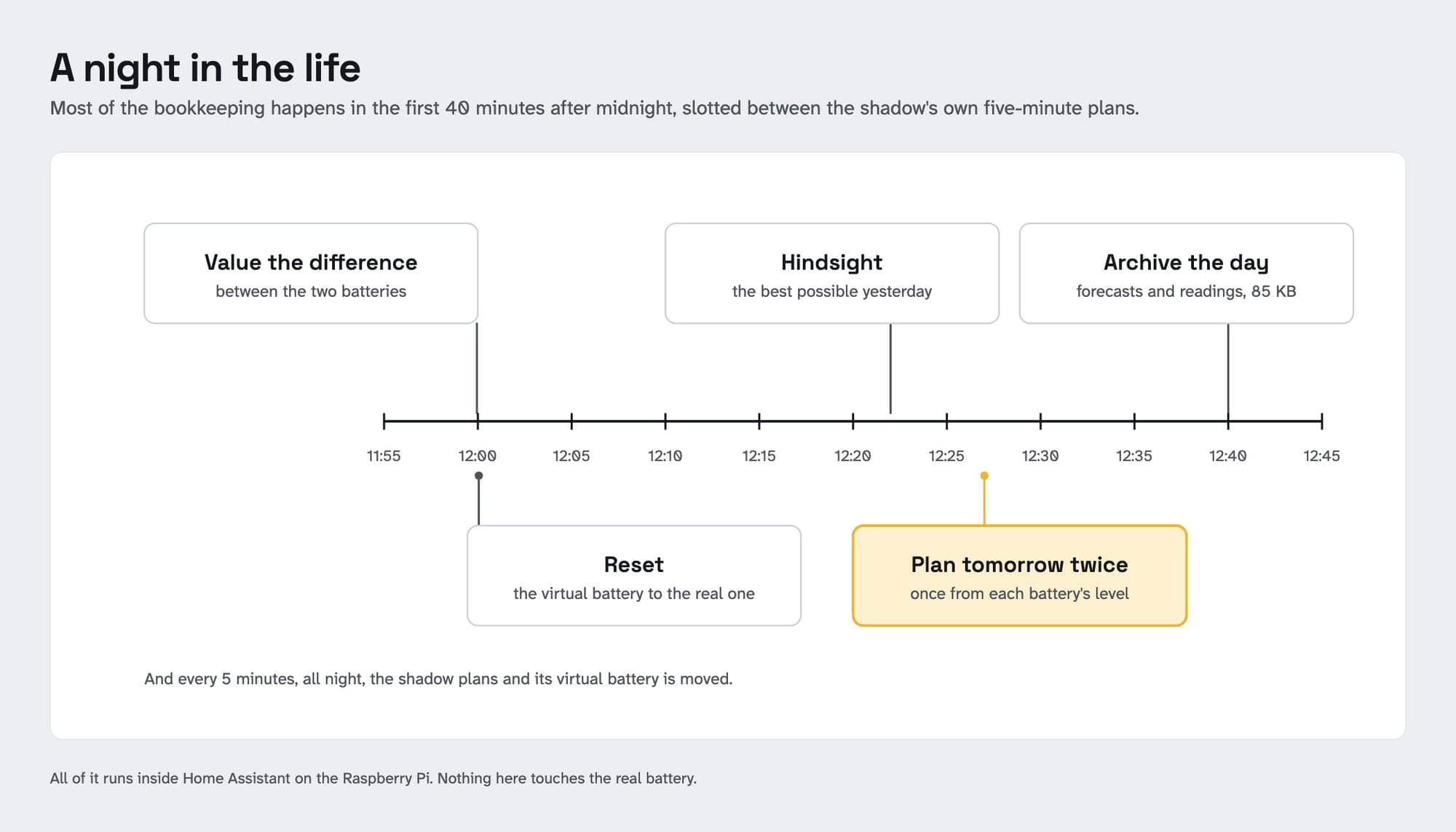
The live shadow was never affected, because it reads the forecast as it is right now. But it meant the house needed its own memory. Every time Solcast updates, a copy of its forecast is now saved, and each night the day's Amber forecasts and what actually happened get packed into one small file, about 85 KB a day.
The second check
I sent the fixes back for a second look. It came back with more suggestions, and this time I didn't take them on faith. I checked each one against the actual code and the house's own numbers before agreeing.
Most held up. One didn't. The reviewer worried the planner might charge and discharge the battery at the same time to game the numbers. I went and read the planner's source code, and it has a switch for each step of the plan that only allows one or the other. So that one's closed.
And checking the replay advice turned up the most important bug of the lot, which nobody had spotted. The live shadow was planning from the real battery's level but carrying out the plan on its own virtual battery. Whenever the two drifted apart, it was making decisions for a battery it didn't have. That's fixed, and the live test starts again from 27 November with everything as it should be.
How the answer changed
Every time I fixed something I replayed the same five days, 21 to 25 November, and kept the old results rather than overwriting them. It's a good reminder of how much the answer depends on getting the plumbing right.
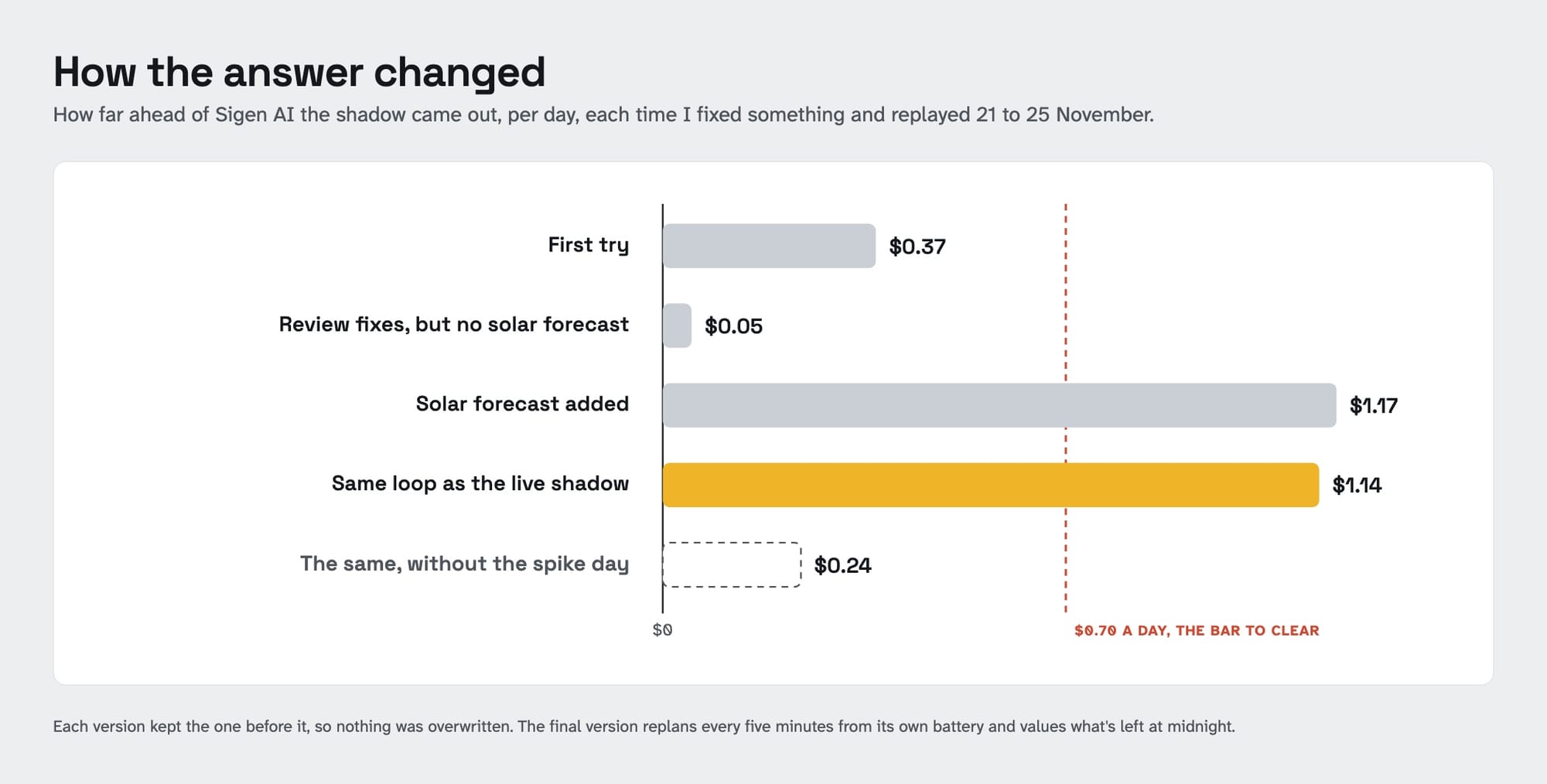
The final version copies the live shadow exactly, planning every five minutes from its own battery and valuing what's left at midnight. It has the shadow about $1.14 a day ahead. Look, that's interesting. But take out the 3 am spike day and it's 24 cents.
Where it's at
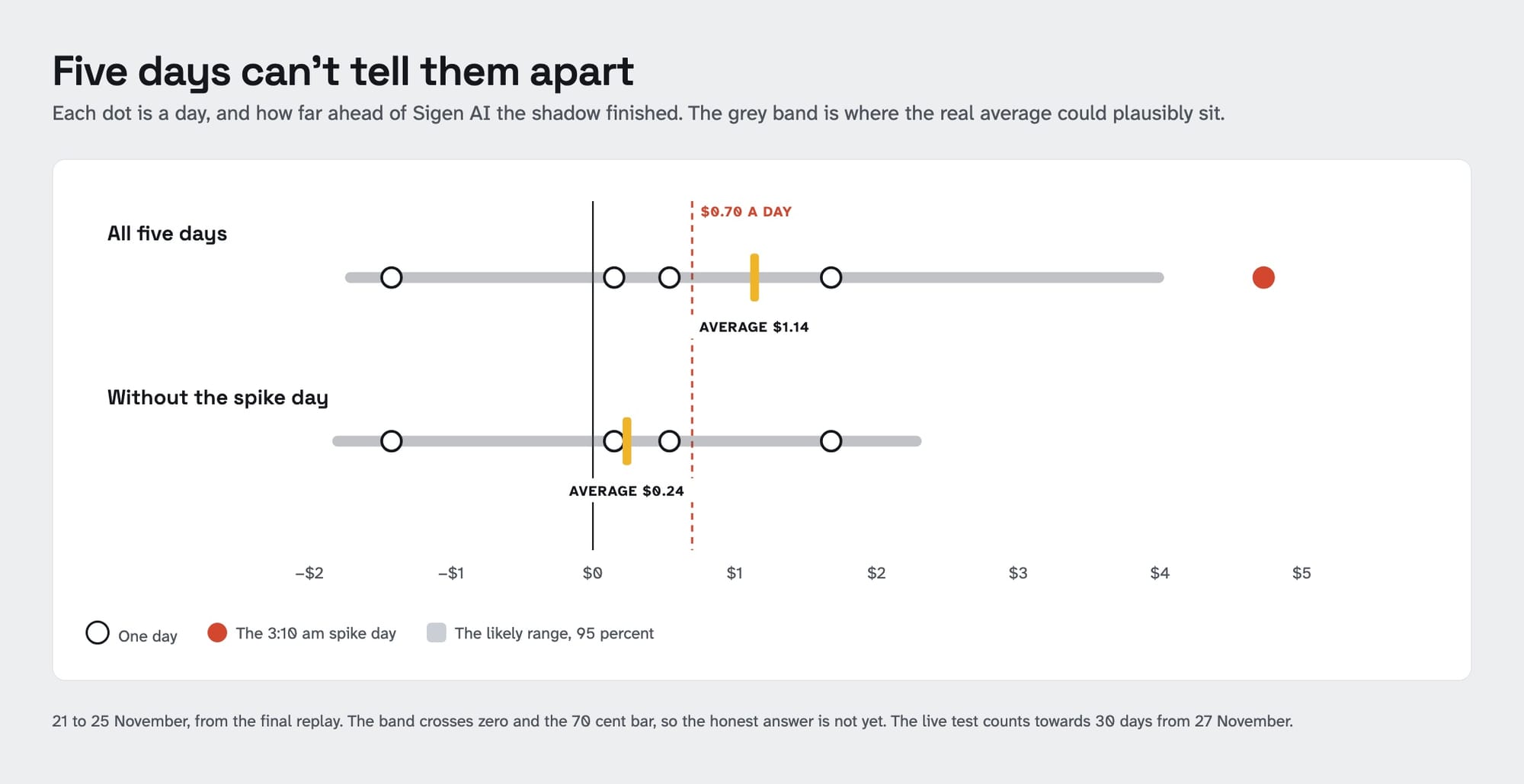
So the honest answer is not yet. Five days is nowhere near enough, most of the shadow's lead comes from one spike, and those five days are rebuilt after the fact with Solcast's own records, which are a touch kinder than the forecast was on the morning.
The real test is the live one, from 27 November, with every forecast kept exactly as it was. The Battery page counts the days towards 30. The shadow only wins if its lead is clearly above 70 cents a day, it isn't behind on ordinary days and it isn't leaning on one lucky spike. If that happens I'll think about letting it drive. If it doesn't, Sigen AI is doing its job and I can stop wondering. I'll write up whichever way it goes.
The maths, for the curious
For anyone who wants the working, here are the three sums that matter, each with a real example.
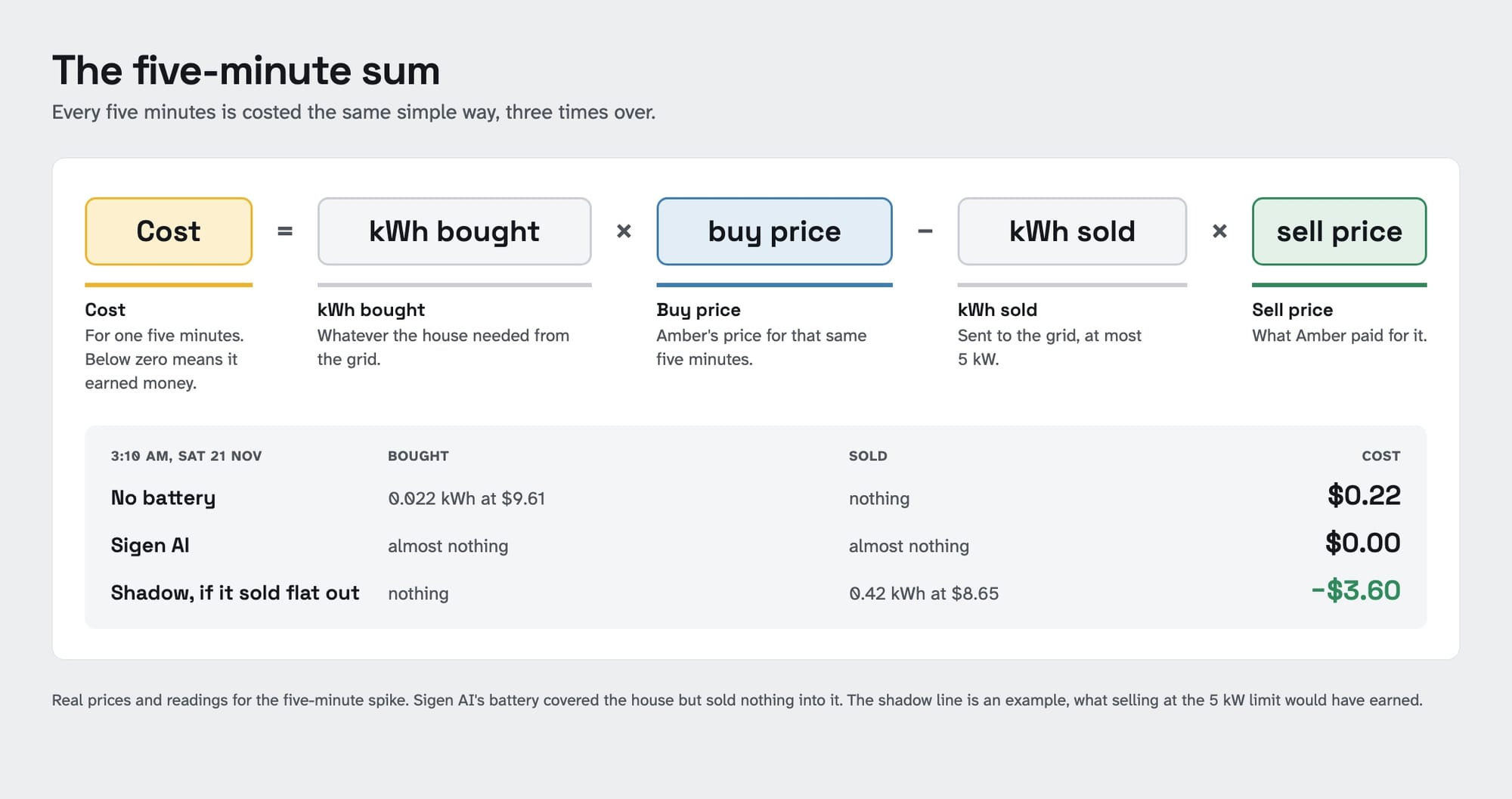
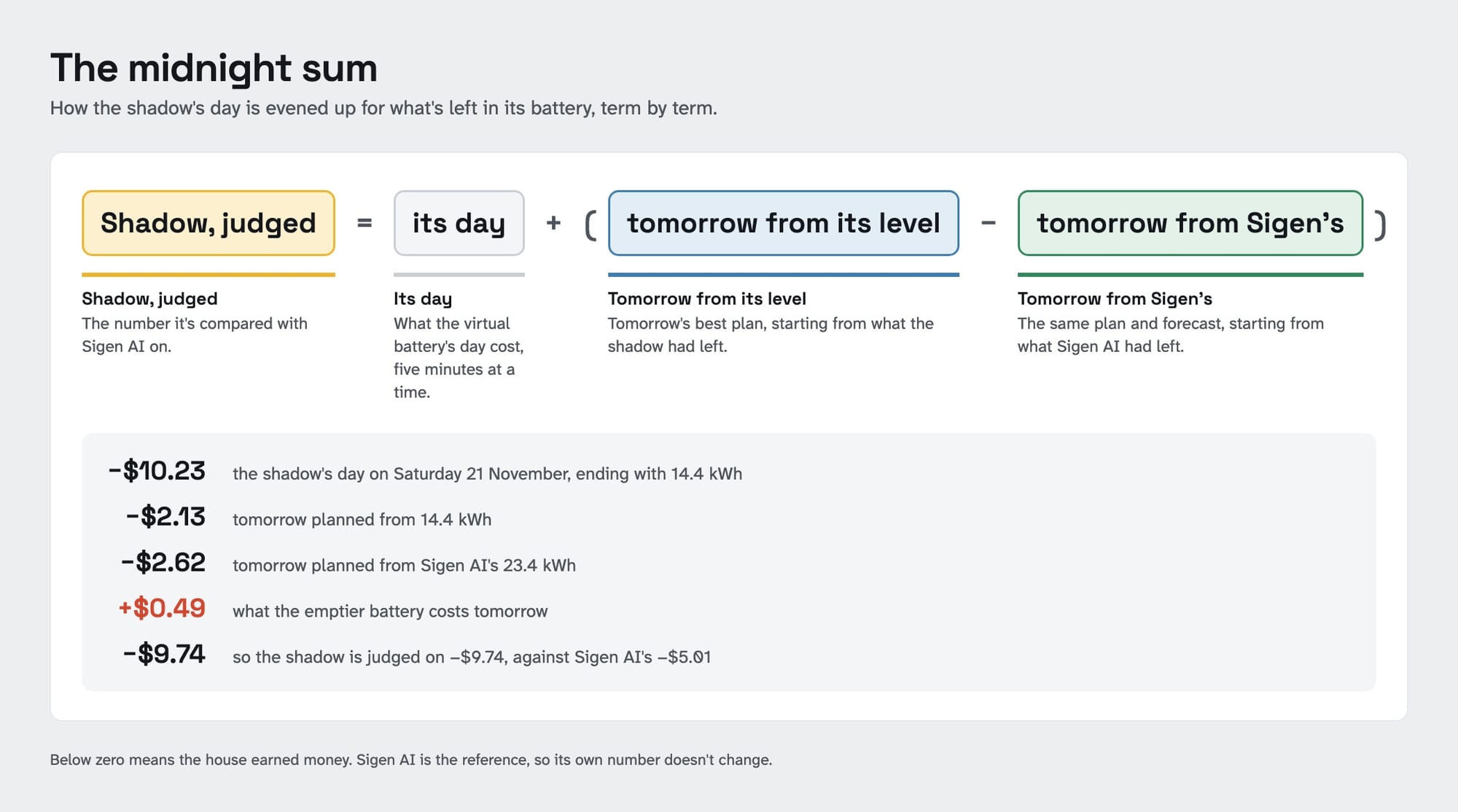
The full working, with every formula, table and bug, is in The maths behind the shadow battery. I'll keep it up to date as the live test runs.
Under the bonnet
- EMHASS runs as a Home Assistant add-on and only ever makes a plan. Nothing acts on it.
- Home Assistant automations move the virtual battery every five minutes and keep the running totals, including the 5 kW export limit and the inverter's 12 kW limit.
- Hindsight runs each night once on electricity cost alone and once allowing for battery wear, and the replays add a five minute version too.
- The forecast archive is a small script Home Assistant runs itself, with a notification if it ever fails.
- Every version of the model and its results is kept, so I can always see what changed and why.
The rest of the kit is in The Home Dash kit list. The Energy page this sits next to is in The Energy page, in order, and the solar forecast it leans on is in Teaching the solar forecast which way the roof faces.
Keep reading the series